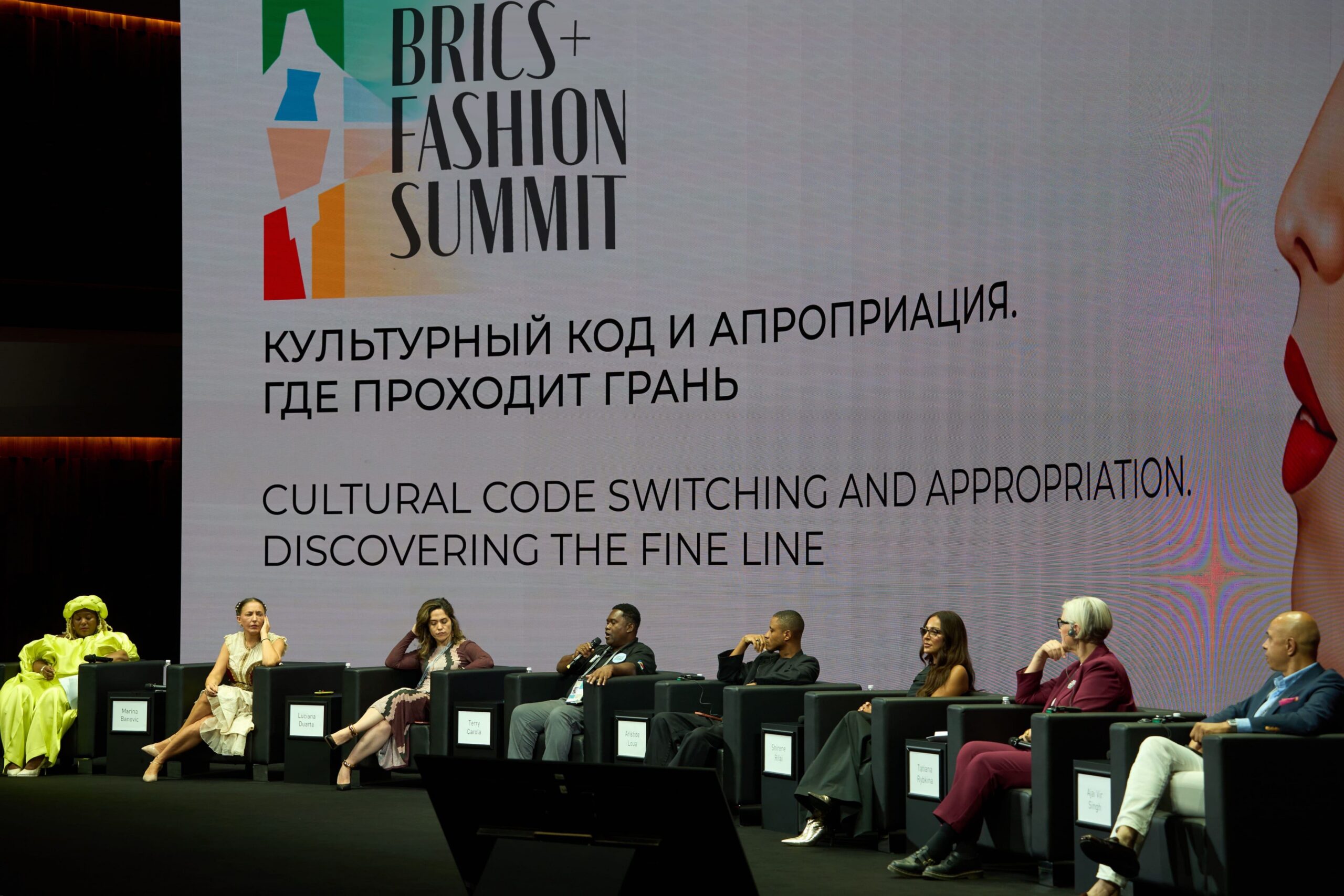
African fashion leaders are turning to alternative trade corridors to capture market share in developing economies, leveraging the upcoming fourth edition of the BRICS+ Fashion Summit in Moscow to build cross-border supply chains and expand retail footprints across the Global South.
Scheduled for 28 – 30 September 2026, the accredited BRICS forum has emerged as the premier commercial platform for the apparel sector across fast-growing markets. The previous edition drew more than 15,000 attendees and executives from over 60 nations, reflecting a broader shift among emerging market brands toward non-Western trade alliances.
Also read: Airnergize Capital reaches R3.89 Billion final close for African Clean Tech Fund
Strategic Delegation Focuses on Commercial Scale
This year’s summit features an expanded African contingent seeking to convert creative output into scalable export volumes.
South African representation includes Stephen Manzini, chief executive officer of Soweto Fashion Week and the South African Fashion Association, alongside Colleen Eitzen, co-founder of retail platform The Space.
They are joined by institutional leaders and BoF 500 figures from key African economies:
- Susan Sabet, Board Member & Secretary General, Egyptian Fashion & Design Council
- Mahlet Teklemariam, Founder, Hub of Africa Fashion Week
- Hind Joudar, Founder & CEO, Maroc Fashion Week
- Brian James Kihindas, Director, Kenya Fashion Council & Nairobi Fashion Week
- Mmantlha Sankoloba, CEO, Botswana Exporters and Manufacturers Association
- Kalistu Ramos Mukoroli, Director, MTC Windhoek Fashion Week
- Nana Addo Tamakloe, Accra Fashion Week
- Tery Carola, CEO, Seychelles Fashion Week
- Dawson Deng, Co-Founder & Executive Director, South Sudan Fashion Week
Overcoming Fragmented Regional Supply Chains
A key priority for African executives is dismantling structural barriers that have historically kept continental fashion markets operating in silos. Fragmented logistics, localized talent strategies, and limited cross-border mobility have capped the sector’s collective bargaining power and intra-African trade volumes.
Following initial alignment meetings in Moscow, regional trade conveners are moving to establish a unified umbrella body for African fashion week organizers to streamline logistics and commercial standards.
“In Moscow, inspired by the broader BRICS framework of multilateral cooperation, we made a collective decision: to build a unified umbrella body for African fashion week conveners,” said Brian James Kihindas, Director of the Kenya Fashion Council. “What started as a pivotal meeting in Moscow has evolved into an active, everyday network driven by our dedicated digital community hub: conveners regularly exchange insights on production standards, buyer acquisition, sponsor engagement, and event logistics suited for African markets.”
Building Direct Export Pipelines to the Global South
For African manufacturers and retailers, the three-day summit provides access to buyers, distributors, and investors from accelerated growth markets across Asia, the Middle East, and Latin America.
[ Regional Production Hubs ] ──► [ BRICS+ Infrastructure ] ──► [ CIS & Global South Retail ]
                                                                       │
                                                                       ▼
[ Cross-Border Talent Mobility ] ◄── [ Joint Designer Exchanges ] ◄── [ Bilateral Trade Agreements ]
Early commercial integration is already underway across several Southern African markets:
- Botswana: House of Ditso is negotiating retail distribution deals to enter Russian and Commonwealth of Independent States (CIS) consumer markets.
- Namibia: MTC Windhoek Fashion Week is finalizing a structured designer exchange framework with Moscow Fashion Week.
“The BRICS+ Fashion Summit is a critical communication platform for emerging countries, especially for Africa,” said Stephen Manzini, CEO of Soweto Fashion Week. “It provides a rare space where our voices, stories, and design philosophies are seen and respected on equal footing. For African creatives, it’s a gateway to connect with like-minded partners from the Global South, share our cultural richness, and position fashion as both a creative and economic force.”
Broader Runway Ecosystem
The summit will run concurrently with Moscow Fashion Week (Sept. 26 to Oct. 1, 2026), which will showcase more than 70 runway presentations from brands across ten countries, including Spain, Türkiye, China, and Sri Lanka.