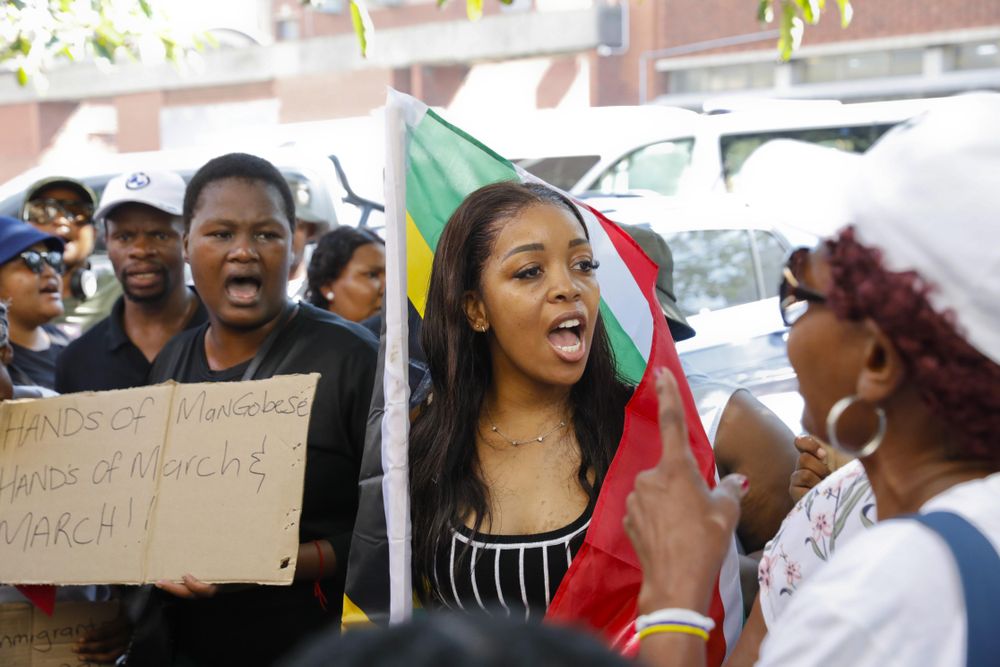
Anti-illegal immigration movement March and March held a press briefing in Umlangeni, led by movement founder and leader Jacinta Ngobese-Zuma, laying out a formal list of demands to the South African government and warning of a national march on 30 June 2026 if those demands are not addressed.
The briefing covered the movement’s origins, its position on illegal immigration, its concerns about border security, and its response to criticism from both government and the media.
How March and March Began
The movement traces its origins to 24 March 2025, when what started as a post on Facebook grew into a public protest. Ngobese-Zuma says the movement faced significant early opposition, including threats that participants would lose their jobs — something she says did materialise in her own case.
More than a year later, the movement says it has grown into a national conversation, with hundreds of anti-illegal immigration protests having taken place across the country since its founding.
What the Movement Stands For
March and March describes itself as a civil society movement not a political party – with a single core focus: fighting illegal immigration in South Africa.
The movement says it is not anti-foreigner, but specifically opposed to undocumented migrants who it claims are placing strain on public services, taking jobs from South Africans and engaging in criminal activity. Gqwetha-Zuma was firm in distinguishing between legal foreign nationals and those in the country illegally, stating that the movement’s protests are directed at the latter.
The movement has rejected labels of xenophobia and vigilantism, and says it has taken legal action against media houses it believes have misrepresented its character and intentions.
The Key Concerns Raised
During the briefing, Ngobese-Zuma outlined several concerns driving the movement’s demands:
Border security: South Africa has 72 border posts — 54 land, 10 airports and 9 sea borders. The Border Management Authority (BMA) has only 800 officers to manage all of them. Gqwetha-Zuma said the BMA is operating at approximately 25% capacity, leaving the majority of the country’s borders inadequately monitored.
Public services under strain: The movement claims that departments including health, education and social development are struggling to adequately service South Africans due to the volume of undocumented migrants also accessing those services.
The township economy: March and March says the township economy, which it estimates contributes approximately R900 billion to South Africa’s GDP, is shrinking. The movement attributes this in part to foreign nationals operating in the informal sector, and cited figures from Durban where over 340 permits have reportedly been issued to foreign nationals to operate in the CBD.
Social grants: The government has budgeted R292.8 billion for social grants in the 2026/27 financial year. The movement says this figure highlights the scale of South Africa’s welfare dependency and argues there are insufficient resources to extend support further.
Drug-related crime: Ngobese-Zuma raised concerns about organised drug networks operating in South Africa, calling on government to take a stronger stance against criminal syndicates.
The Nine Demands
March and March presented the following formal demands to the South African government:
- Suspend refugee applications for 14 days while the government develops an interim solution, pending the outcome of the current White Paper review process.
- Immediate mass deportation of all illegal immigrants currently in the country, with the cost of repatriation borne by the individuals where possible.
- Amend legislation to allow the BMA to operate inland not only at border posts, so that it can locate and remove individuals who have overstayed their permitted time in the country.
- Transfer all immigration officers to the BMA and increase the total number of immigration officers nationwide.
- Transfer all border police from SAPS to the BMA, to ensure a unified command structure at the borders.
- Allocate a budget to build a secure border fence as a matter of urgency.
- Declare a state of emergency on illegal immigration, framing the current situation as a national invasion.
- Pass legislation reserving the township economy for South African-owned small businesses only.
- President Cyril Ramaphosa to address the nation on all of the above demands before 30 June 2026.
The movement has stated that if the president does not respond adequately before the deadline, its supporters plan to take to the streets on 30 June 2026.
The 30 June Date Explained
When asked about the significance of 30 June, Ngobese-Zuma clarified that March and March did not originate the date, it was set by another aligned movement. She said the date is intended to serve as a deadline for government to present a clear plan for addressing illegal immigration, and as an appeal for undocumented migrants to self-deport ahead of the deadline.
She said the movement does not expect all illegal immigrants to have left by that date, but wants a credible government response before then. She also pushed back on suggestions that the 30 June march is intended to be violent, accusing government of “craving” violence to discredit the movement.
Government Meeting Described as “Fruitless”
Ngobese-Zuma said March and March attended a meeting with government ministers on the day of the briefing, describing it as a “tick-box exercise” in which government appeared to be managing optics rather than engaging with substance.
She said government has made a habit of intimidating its own citizens rather than addressing the root causes of the crisis, and accused the executive of planning to deploy the South African National Defence Force (SANDF) against protesters in June – a move she described as deeply concerning.
She also confirmed that March and March has held separate engagements with major private sector companies including Checkers, Mr D and McDonald’s, requesting information about their employment of foreign nationals and the permits those individuals hold.
On Political Party Involvement
Responding to questions about whether the movement is aligned to or funded by any political party, Ngobese-Zuma said March and March is and has always been a movement, not a party. She said supporters from Action SA, the MK Party, the IFP and the PA have been part of the movement from its earliest days before it gained national prominence.
She confirmed she has received offers from approximately seven or eight political parties to either join them or convert March and March into a political party, and has declined all of them. She did not rule out entering formal politics at some point in the future but said her current focus is building the movement and growing patriotism among South Africans.
What Happens Next
The movement is calling on professionals, churches, influencers, traditional leaders and ordinary South Africans to mobilise ahead of 30 June 2026. The central ask is for President Ramaphosa to publicly address the nation on the demands listed above before that date.
Whether the government responds and how will determine the scale and nature of what happens on 30 June.