Nobody said July was going to be easy. But last week delivered a combination of pressures that tested South African financial markets, households, and businesses simultaneously and understanding what happened and why matters for every South African with money to manage, a business to run, or simply a cost of living to navigate.
A rapidly escalating conflict between the United States and Iran sent shockwaves through global markets that arrived in South Africa with immediate and tangible force. The rand depreciated to its weakest level since April. Oil breached $100 a barrel for the first time since May. Inflation came in above expectations. And the South African Reserve Bank surprised the market with a decision that nobody saw coming. Here is the full picture and what to watch this week.
Also read: Rooibos heads to Space: South Africa launches groundbreaking ISS Science Project
The Rand weakening to R16.80 and Climbing
The rand had a difficult week and the deterioration was sharp.
After trading in a relatively contained range of R16.39 to R16.52 for most of the week, the currency broke above R16.80 against the US dollar on Thursday, its weakest level since April 2026.
Two factors drove the move. The first was external.
The escalating US-Iran conflict triggered a global spike in risk aversion, with investors moving swiftly out of higher-yielding assets and into the safety of the US dollar. South Africa, as a small open economy deeply integrated into global financial markets, felt that shift immediately and acutely. When global risk appetite contracts, capital flows out of emerging market currencies and the rand, with its relatively high yield and its sensitivity to commodity prices and global sentiment, is consistently one of the first currencies to feel that pressure.
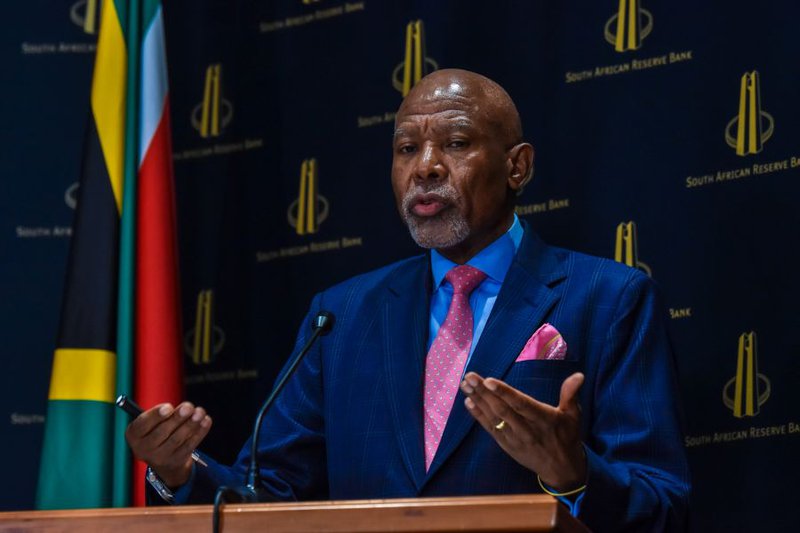
The second factor was domestic and it surprised the market. The South African Reserve Bank held the repo rate steady, against a market consensus that had positioned for a 25-basis-point cut. The SARB’s decision signalled that the central bank sees sufficient risk in the current inflation and global environment to maintain a cautious monetary policy stance and the rand’s reaction reflected the market’s recalibration of that expectation.
The SARB Surprise – What the Rate Hold Means for South Africans
The South African Reserve Bank‘s decision to hold the repo rate steady was the domestic market event of the week and its implications deserve careful consideration. Market consensus had positioned for a 25-basis-point cut, reflecting growing optimism about South Africa’s inflation trajectory and the expectation that the SARB would begin the process of monetary policy normalisation. The hold suggests that the central bank is not yet confident that the conditions for easing are sufficiently established.
Several factors likely informed the decision. The global oil price surge with Brent crude breaking above $100 per barrel — introduces significant upside risk to South Africa’s inflation outlook, given the country’s status as a net oil importer and the direct transmission of oil prices into petrol costs and, through transport costs, into food and goods prices more broadly. A South African Reserve Bank that cuts rates into a rising oil price environment risks having to reverse course quickly, a credibility cost that central banks are generally reluctant to incur.
The June inflation reading, which came in at 5% above both the May reading of 4.5% and the market expectation of 4.9% will also have factored into the SARB’s deliberations. With inflation moving in the wrong direction and global cost pressures intensifying, holding rates steady is the risk-management decision of a central bank that wants to see more evidence before committing to an easing cycle.